
Designing Executive Spaces: Authority Through Material
How high-end material selection — stone, veneer, and precision lighting — communicates leadership and refinement in corporate environments.
An executive floor is not simply an office — it is an extension of corporate identity, a physical statement about how an organisation sees itself and wants to be seen. At Fervent Multiboard Industries, the chairman floor brief asked for authority, refinement, and a sense of permanence. The challenge was to achieve all three without tipping into ostentation.
Material selection is where executive interiors succeed or fail. Stone, in its natural variation, conveys permanence — it is the material of institutions and cathedrals, and it carries that cultural weight into any room it enters. We specified a warm-vein marble for the reception counter and selected book-matched stone panels for the chairman's feature wall. The colour temperature of the stone — warm ivory with gold undertones — was chosen to complement the oak veneer used throughout the joinery.
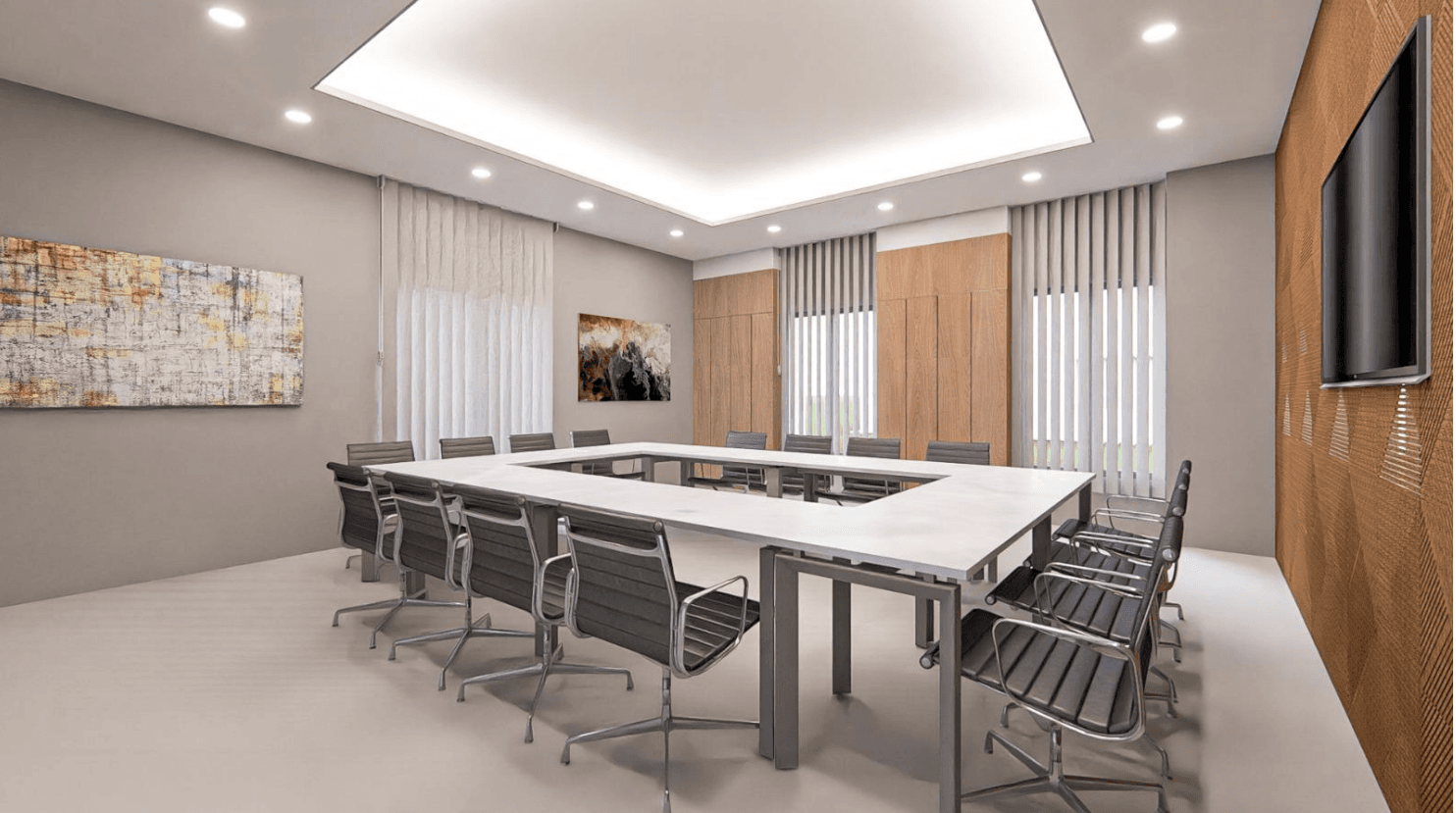
Veneer detailing is among the most demanding elements of high-end commercial interiors. The grain direction, the junction at corners, the reveal depth at panel edges — these are the details that distinguish a considered design from a competent one. On the Fervent project, full-height slatted oak joinery runs the length of the main corridor, creating a rhythm that draws visitors through the space while softening the acoustics.
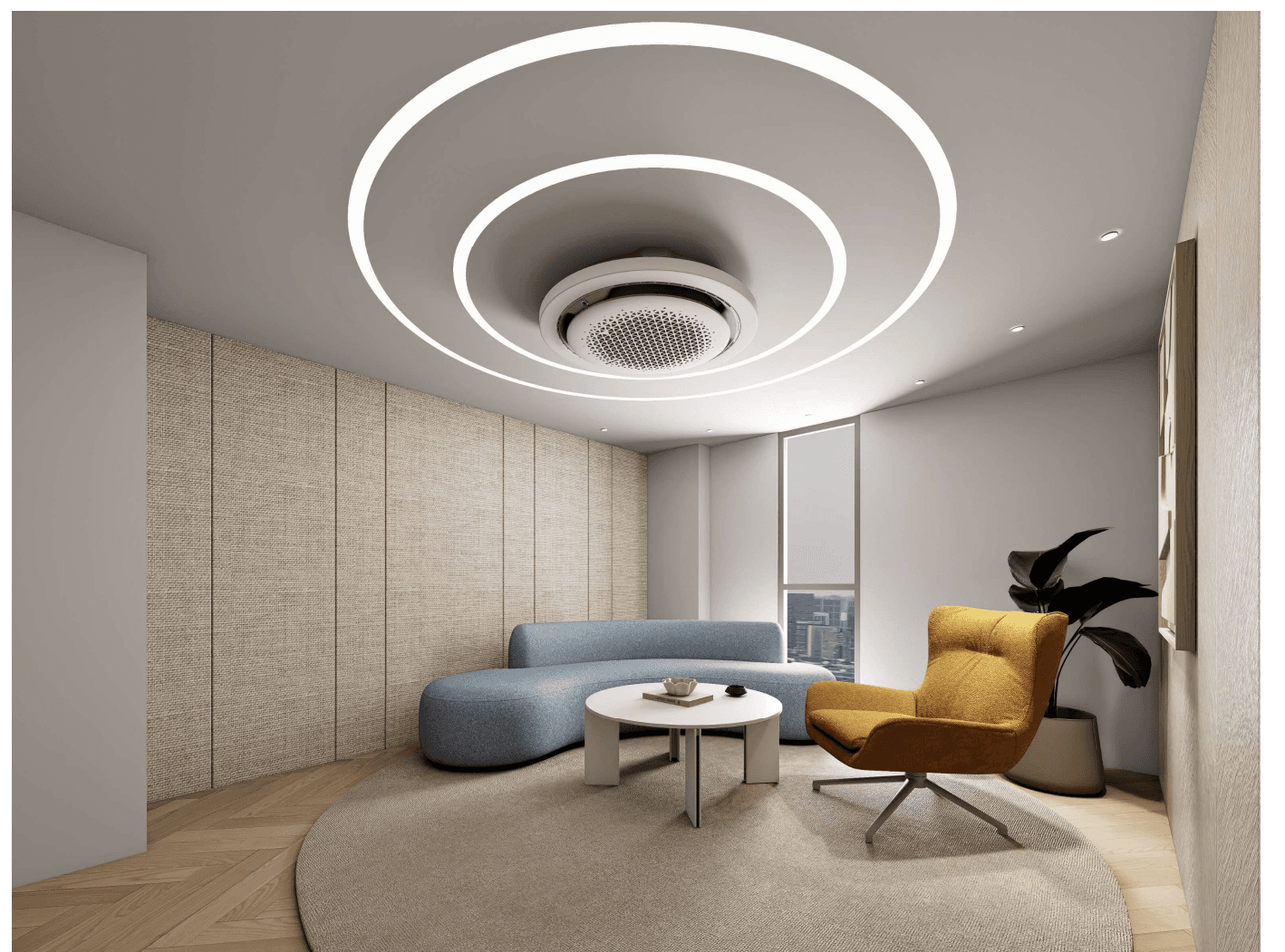
Lighting at this level is as much about sculpture as illumination. Coved ceiling details conceal linear LED channels that wash the ceiling plane evenly, eliminating harsh shadows. A circular pendant in the chairman's suite provides a focal centrepiece while reinforcing the considered geometry of the room. Colour rendering index was a non-negotiable specification — CRI 95+ throughout, ensuring that the material palette reads correctly under artificial light.